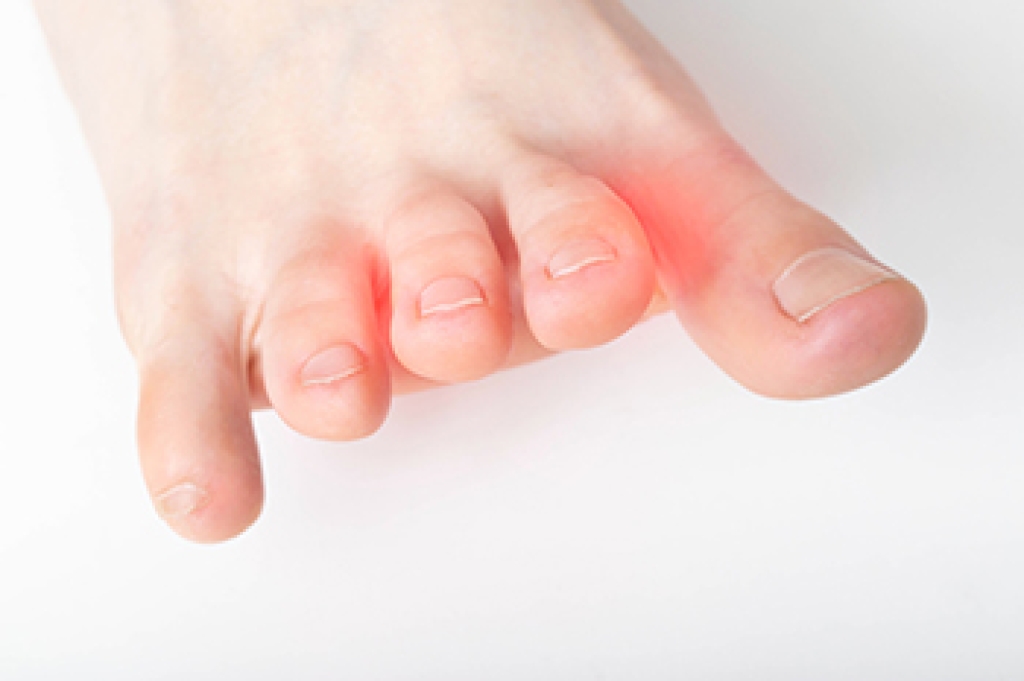
Freiberg’s disease is an uncommon condition that affects the long bones in the ball of the foot, most often the one beneath the second toe. It occurs when the bone loses some of its normal blood supply, leading to pain, stiffness, and swelling during walking or activity. Many people first notice discomfort that feels like pressure under the toe, especially when wearing thinner shoes or standing for long periods. As the condition progresses, the joint may become less flexible, and the pain can begin to interfere with daily movement. Because early symptoms can resemble other forefoot problems, it is easy to overlook or misidentify. A podiatrist can take a closer look through examination and imaging to confirm the diagnosis and recommend treatments that reduce stress on the joint and protect long-term function. If you have persistent pain under the second toe that is not improving, it is suggested that you see a podiatrist for proper evaluation.
Some foot conditions may require additional professional care. If you have any concerns, contact Wendy K. Stinson, DPM of New Jersey. Our doctor can provide the care you need to keep you pain-free and on your feet.
Rare Foot Conditions
The majority of foot conditions are common and can be treated by a podiatrist. Standard diagnostic procedures are generally used to identify specific conditions and treatment can be rendered. A podiatrist also treats rare foot conditions which can be difficult to diagnose and may need extra attention and care.
There are many rare foot conditions that can affect children. Some of these can include:
- Freiberg’s disease
- Kohler’s disease
- Maffucci syndrome
Freiberg’s disease - This can be seen as a deterioration and flattening of a metatarsal bone that exists in the ball of the foot. It typically affects pre-teen and teenage girls, but can affect anyone at any age. Symptoms that can accompany this can be swelling, stiffness, and the patient may limp.
Kohler’s disease - This often targets the bone in the arch of the foot and affects younger boys. It can lead to an interruption of the blood supply which ultimately can lead to bone deterioration. The patient may limp or experience tenderness, swelling, and redness.
Maffucci syndrome - This affects the long bones in a child’s foot leading to the development of abnormal bone lesions. They are benign growths and typically develop in early childhood and the bones may be susceptible to breaking.
A podiatrist can properly diagnose and treat all types of rare foot conditions. If your child is affected by any of these symptoms or conditions, please don’t hesitate to call our office so the correct treatment method can begin.
If you have any questions, please feel free to contact our office located in Parsippany-Troy Hills, NJ . We offer the newest diagnostic and treatment technologies for all your foot care needs.
